Our writers test and research products independently. When you buy through a link on our site we may earn a commission, but we’ll only ever publish an honest review. Find out more.
10 best compost bins for sustainable waste disposal, as recommended by Mumsnet users
Looking for a simple way to manage your family’s food and garden waste? A compost bin could be the ideal solution.
By Lucy Cotterill | Last updated Aug 19, 2025
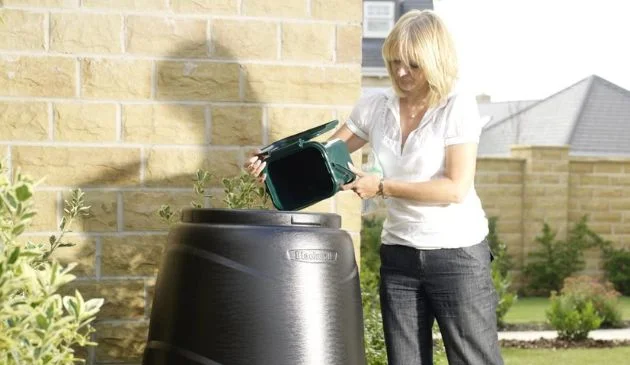
In recent years, more and more of us have started taking steps to reduce the amount of waste we produce as a family, donating unwanted items, recycling more and attempting to live a more sustainable lifestyle. A key part of this is reducing the amount of food that goes to landfill - planning meals, reusing leftovers, freezing food and, where possible, composting kitchen and garden waste rather than adding it to the main refuse bin.
If you have a garden, a compost bin is not only a sensible and eco-friendly way to manage your family’s food waste, but it can also produce a mineral-rich compost which can provide the ideal pH balance for the plants in your pots and borders to thrive.
With a wide range of composting bins and composting methods to choose from, we set to work to bring you a definitive list of the best compost bins you can buy today, doing extensive research so that you don’t have to.
Here are the best compost bins you can buy in 2022.
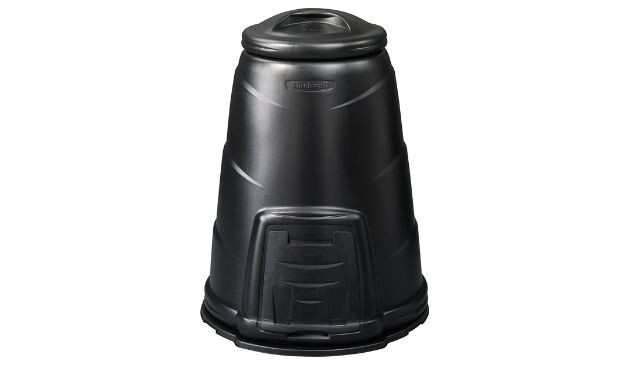
1. Best overall compost bin: Blackwall 220L Compost Converter
Price: £62.43 | Buy now from Amazon
“I have two of the Dalek style composters which grass cuttings, leaves etc go into. I have just turned over the contents and put the rotted down compost into the garden and anything not fully composted I turned over and put back. They do get full when the lawn is getting mown more frequently so we do sometimes put them out for collection by the council." (Type of composter recommended by Mumsnet user Berthatydfil)
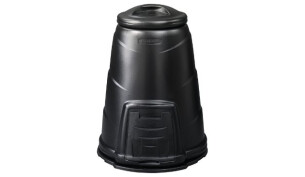
With an easy and simple set up (with no assembly required), the solid and sturdy all-in-one design of the Blackwall 220L Compost Converter makes it a great option for beginners or those who are making compost at home for the very first time.
It has a wide base that stays open to the elements for better soil quality and a release door to extract the contents. It’s also easy and straightforward to use - you simply need to layer a combination of ‘green’ and ‘brown’ waste and aerate it regularly. With a substantial 330L storage capacity, it’s ideal for families who produce a reasonable amount of food waste or have a large garden that would benefit from a generous helping of compost.
Made from recycled plastic with a windproof lid that needs to be twisted to release, the Blackwall 220L Compost Converter offers good value for money - as long as you can see past its ‘Dalek-like’ appearance.
Pros
Quick and easy to set up
Wide hatch at bottom for easy removal
Windproof lid to keep contents dry and protected from the elements
Cons
The ‘Dalek’ look may not appeal to everyone
Key specs
Dimensions: H100 x W80 x D80cm
Capacity: 330L
Suitable for: Outdoor
Material: Recycled plastic
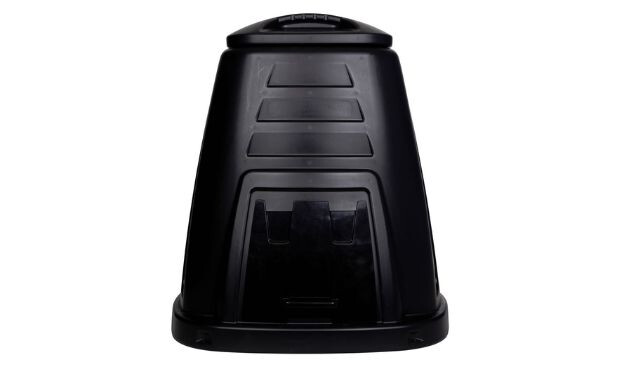
2. Best budget compost bin: Wilko Composter 220L
Price: £26 | Buy now from Wilko
“We went with a Dalek because it's almost smell-free and has a very small footprint.” (Type of bin recommended by Mumsnet user woodencoffeetable)
A compost bin with a similar look and design to the Blackwall Compost Converter but at a more purse-friendly price, Wilko’s own-brand equivalent comes at a lower cost with just a slightly smaller storage capacity.
Made from strong and sturdy recycled plastic, whilst some found the lid didn’t fit as securely as they’d like, it offers a budget-friendly way to kick start your composting journey and is quick to set up and get started.
Pros
Easy to use
Budget-friendly price
Cons
Some reviewers found the lid didn’t seal securely
Key specs
Dimensions: H86 x W76 x D72 cm
Capacity: 220L
Suitable for: Outdoor
Material: Recycled plastic
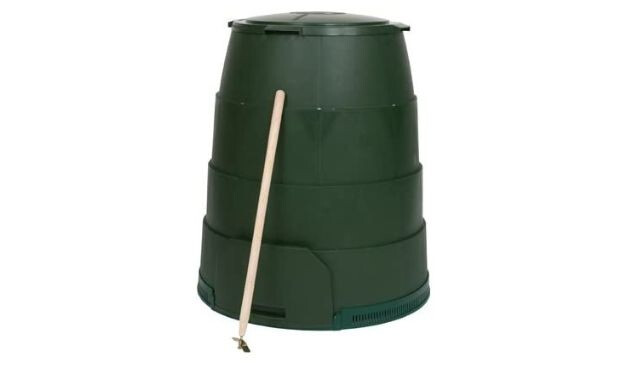
3. Best rat-proof compost bin: Green Johanna 350L Hot Composter
Price: £134.99 | Buy now from Amazon
"Take a look at the Johanna. We have a largeish garden so have four. No vermin, composts quickly. Very clean.” (Recommended by Mumsnet user GoldMoon)
One of the most common concerns on the Mumsnet forums from those composting food waste for the first time is whether they will attract unwanted flies, vermin or rodents such as mice and rats.
Unlike some food composters which advise against adding meat and fish products, the Green Johanna Hot Composter can be used for all kitchen waste including bones. With a ventilated base plate, its holes are big enough to allow worms to enter but small enough to protect against unwelcome guests.
It has a cone-shaped design so it pulls the contents down into the middle of the bin to improve the amount of air that can circulate. The handy sliding doors allow you to remove the contents from both the front and back, making it fully accessible and reducing mess when gathering the compost for your garden.
Pros
Can be used with all kitchen waste including meat, fish and bones
Rodent-proof base plate
Substantial capacity
Cons
Requires some stacking and basic assembly before use
Key specs
Dimensions: 80 x 80 x 95 cm
Capacity: 350L
Suitable for: Outdoor
Material: Plastic
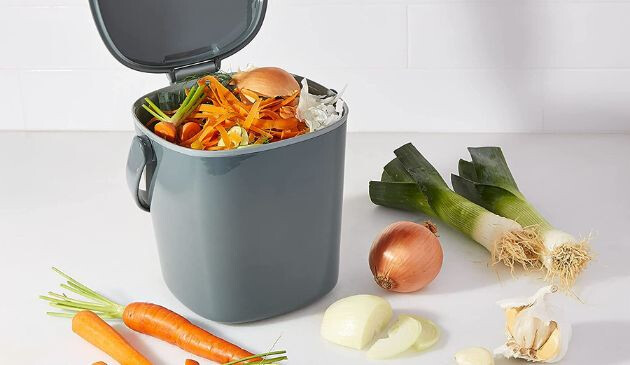
4. Best countertop compost bin: OXO Good Grips Compost Bin
Price: £16.50 | Buy now from Amazon
“We've got the OXO Good Grips Compost Bin. No smells as long as you don't overfill it or stop the lid closing properly. It goes in the dishwasher as well.” (Tried and tested by Mumsnet user Narya)
If you’re keen to reduce the amount of food waste going in your main bin but don’t fancy walking to the end of your garden to compost after prepping every single meal, a countertop compost or food waste caddy is a great place to start. A smaller-sized food caddy for indoor use only, they are ideal for families who want to dispose of food waste such as potato and vegetable peelings whilst preparing meals in the kitchen.
With a stylish and modern design that won’t look out of place on your kitchen countertop, the OXO Good Grips Countertop Compost Bin comes with a convenient 2.83L capacity and smooth interior walls that prevent build-up, and can be used with or without liners.
The lid flips straight back down after loading and clips securely back into place to prevent any odours from escaping. When it comes to emptying, simply use the handle to carry to your external compost bin or food recycling and unclip the lid fully to empty the contents with ease.
Pros
A convenient way to dispose of kitchen waste
Secure lid to lock in odour
Carry handle
Cons
Small capacity
Food caddy only - will need a separate compost bin to produce compost
Liners will be visible if used
Key specs
Dimensions: 19.69 x 18.54 x 19.3 cm
Capacity: 6.62L
Suitable for: Indoor
Material: Plastic
5. Best small compost bin: Blackwall Twin Pack Bokashi Bin
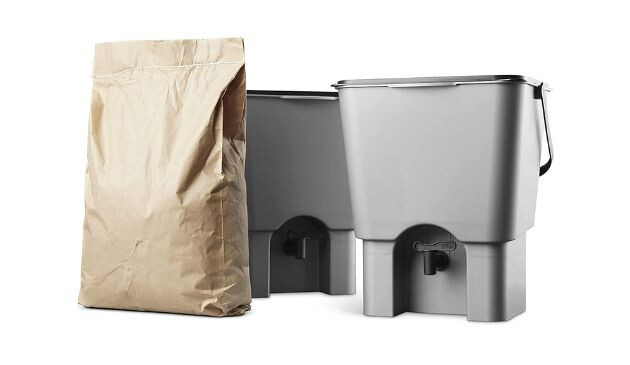
Price: £39.99 | Buy now from Amazon
“Bokashi is very effective. I have a kitchen caddy on the go all the time and when it is full it goes outside to pickle for a month or two then I make a soil factory from a cardboard box and whatever soil or compost I have to hand. The resulting compost smells great and is always full of nice fat worms. The pickling smell seems to keep cats and mice away.” (Type of compost bin recommended by Mumsnet user growinggreyer)
The Bokashi method of composting is a simple way to reuse and recycle food waste from your kitchen but is suitable for meat, fish and dairy as well as fruit and vegetable peelings. Simply pop your waste into the bin, add some of the specially formulated Bokashi Bran and leave it to work its magic.
The Blackwall Bokashi Bins come in a twin pack, meaning that you don't need to stop saving waste whilst the other is fermenting so you shouldn't run out of space.
A few weeks later, you can move the waste to your outdoor compost or dig into the garden to give your plants a nutrition boost. Bokashi is also popular for the liquid ‘tea’ it creates, an effective solution for preventing algae build-up in your drains.
Pros
Twin pack means you never have to stop managing food waste
Meat and fish can be processed in Bokashi
Cons
Ongoing cost of Bokashi Bran
Too small to be used for garden waste (kitchen waste only)
Key specs
Dimensions: 24.99 x 32 x 37.01 cm
Capacity: 18L per bin
Suitable for: Indoor
Material: Plastic
6. Best wooden compost bin: Lacewing Easy Wooden Compost Bin
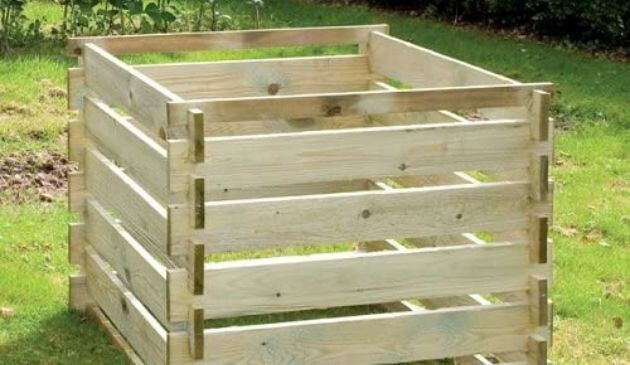
Price: £69.99 | Buy now from Amazon
“I use the wooden slatted one because it is easy. Once every four or five months, I pull out the bottom slats and dig out the compost and put it back on top. I use all uncooked vegetable waste, garden waste, some newspaper and cardboard. It is a good idea to wet the cardboard as you will find loads of worms are attracted to it. It never smells. I don’t put any fruit peelings or fruit in there and definitely no cooked food.” (Type of compost bin recommended by Mumsnet user florentina1)
If you're not keen on ruining the aesthetic of your garden with a large plastic Dalek or simply want a more natural or sustainable design for your composting, then the Lacewing Easy Wooden Compost Bin offers an affordable and eco-friendly way to create a substantial yield.
Made from pressure-treated wood with a 15-year guarantee against rot, this open to the elements composter is easy to aerate and turn with open slats for additional ventilation.
This type of design can attract flies and you’ll need to avoid storing meat or egg products if you don’t want some visitors of the rodent variety but, used sensibly, they offer a quick, efficient and economic way to compost.
Pros
Large capacity
Easy to aerate, ventilate and turn as required
More natural looking appearance than plastic bins
Cons
Not recommended for storing cooked food as may attract vermin
May attract flies
Needs assembly
Key specs
Dimensions: 92.99 x 92.99 x 70 cm
Capacity: 605L
Suitable for: Outdoor
Material: Wood
7. Best large compost bin: Squeeze Master 300L Compost Bin
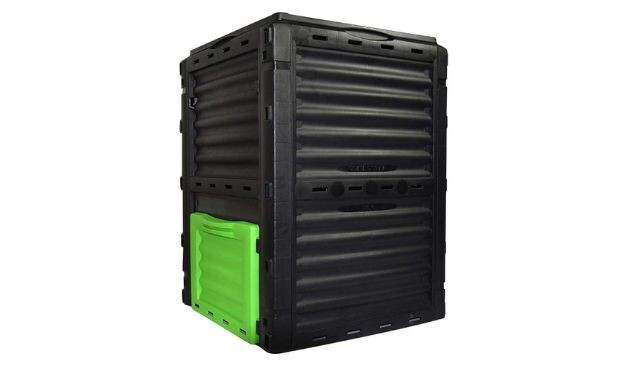
Price: £59.99 | Buy now from Amazon
If you have a larger family, cook regularly from scratch or amount a substantial amount of food and garden waste, you’re going to need to look for a compost bin with a larger capacity.
With an efficient composting time of just four to seven weeks (or even quicker in warmer temperatures), the Squeeze Master has an impressive 300-litre capacity and comes with a large top opening for accessible filling and a door at the base for easy removal.
Whilst it’s not necessarily the most attractive design, its speed of processing makes it a popular choice. Made from 90% recycled materials, it’s really easy to set up and get started, simply clicking into place with no tools required.
Pros
Simple to assemble
Large storage capacity
Quick processing time
Cons
Not the most robust
Not everyone will like the aesthetic of this design
Key specs
Dimensions: 60.5 x 60.5 x 82.5 cm
Capacity: 300L
Suitable for: Outdoor
Material: Plastic
8. Best wormery compost bin: The Original Wormery Classic Worm Composter
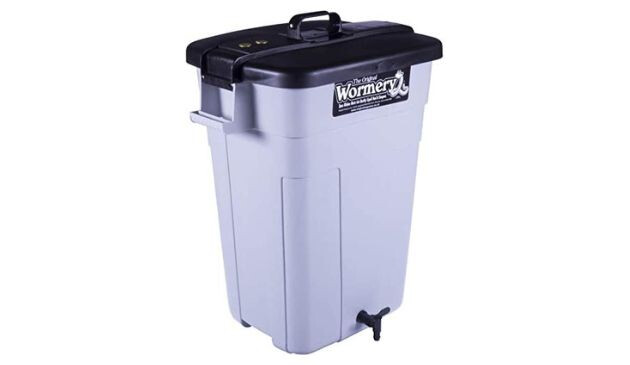
Price: £110.47 | Buy now from Amazon
“Wormery! I love mine. You can put anything in it, including cooked food. You get 'tea' and compost at the end.” (Type of compost bin recommended by Mumsnet user ADarkandStormyKnight)
Did you know you can break down food waste and make compost naturally, simply by using worms?
Wormeries are another popular composting method, using live tiger worms positioned inside chambers in a wormery who munch their way through the food waste. You can add virtually any kitchen and food waste to your wormery, including vegetable peelings, tea bags, eggshells and even cooked food, as well as newspaper and kitchen towels.
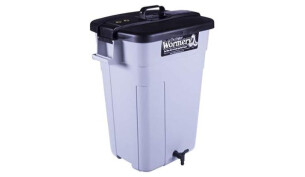
The Original Wormery is a large plastic ‘tub’ like storage bin with a 100L capacity and rubber-sealed lid that comes with everything you need to get started (including the worms!). During the fermenting process, your food waste will be turned into liquid feed for your potted plants, borders and even your lawn.
Pros
Creates nutrient-rich liquid feed or ‘tea’
Less labour intensive than a traditional compost bin
Cons
Costly
Less aesthetically pleasing
The thought of worms may give you the ‘ick’
Key specs
Dimensions: W53 x H73 x D43 cm
Capacity: 100L
Suitable for: Outdoor
Material: Plastic
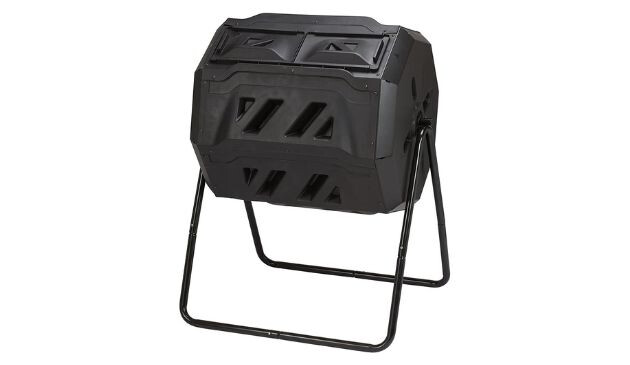
9. Best rotating compost bin: Garden Grow 160L Rotating Tumbling Composter
Price: £99.99 | Buy now from Amazon
“If you can, get one that turns. Aerating it is the hardest bit.” (Type of compost bin recommended by Mumsnet user HasaDigaEebowai)
One of the most complicated parts of harvesting good quality compost is the aerating.
For your food waste to effectively ferment, it needs to be turned regularly to allow the air to ventilate freely. As such, most compost bins need you to manually lift and turn the contents with a pitchfork, which can be challenging and labour intensive.
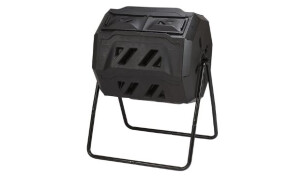
The Garden Grows 160L Rotating Composter offers a great solution, with a large plastic dome on legs which is less Dalek in style and more ‘school fete tombola’.
The plastic dome is split into two parts for batch processing, meaning you can have some compost ready to go whilst preparing a second batch on the other side. Slide open the doors to add your contents and then simply rotate to turn the contents with ease.
Pros
The dual pod design allows batch composting
Simplifies the aerating and turning process
Cons
Smaller storage capacity
Requires self-assembly
Key specs
Dimensions: L71 x W64.5cm x H96.6cm
Capacity: 160L (2 x 80L)
Suitable for: Outdoor
Material: Plastic
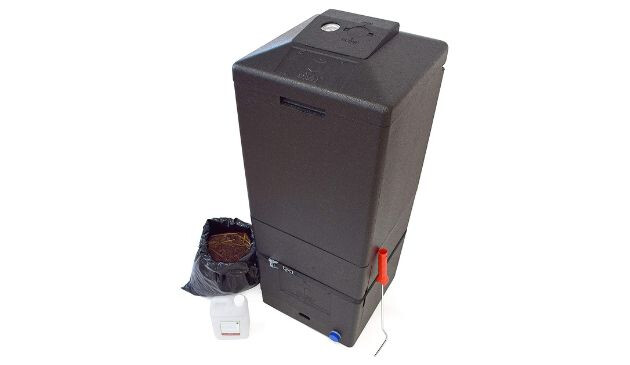
10. Best hot compost bin: Hotbin Mini Composter
Price: £264.99 | Buy now from Amazon
“I got one last year and I now have really good compost. They aren't cheap, but very straightforward and no work - you can start composting straightaway.” (Tried and tested by Mumsnet user WellTidy)
Many compost bins can take around three to nine months to produce compost, so if you’re looking to get your compost more quickly, Hotbins are known for their rapid speed and even won the RHS Chelsea Garden Product of the Year in 2019.
Whilst you certainly pay a premium for the benefit, Hotbins offer the ability to create rich compost incredibly quickly - around 30 to 90 days which is 32% faster than cold composting.
Given the right contents (a mix of ‘green’ waste, bulking agent for aeration and shredded paper to balance moisture) the Hotbin Mini Composter will reach internal temperatures of around 40 to 60 degrees, allowing it to break down far more efficiently. Unlike some compost bins, they can also continue to work during the winter months.
Pros
Incredibly fast compost production
Can be used all year round
Small footprint (around the size of a wheely bin)
Cons
Costly
Due to the price, more suited to those who love gardening and want to ensure pH balance in their soil
Key specs
Dimensions: 115 x 45 x 45cm
Capacity: 100L
Suitable for: Outdoor
Material: Polypropylene
Why should I use a compost bin?
Compost bins allow you to recycle and reuse your garden and kitchen waste, turning it into a mineral-rich mulch to improve your soil. This method of natural recycling reduces the amount of food waste going to landfill or filling up your main waste bins. For many, composting is a relatively small task that can have a big impact on your family’s environmental impact.
Types of compost bins
There are various ‘styles’ or types of compost bins including:
Stationery compost bins - Perhaps the most common type of compost bin and often referred to as ‘Daleks’ due to their appearance, these stationery, freestanding compost bins are usually made from plastic. They come with a lid for adding contents and an opening base at the bottom for accessing the compost it creates.
Rotating bins - Rotating compost bins are usually raised on legs and able to be turned or rotated freely, an action which can speed up processing and ease the aerating process by allowing air movement around the contents.
Hot bins - Hot compost bins have improved thermal regulation and keep the heat inside the compost bin, enabling the contents to be converted to rich compost far more quickly than a traditional compost bin.
Wooden bins - These offer a more sustainable and natural appearance for those who want a more aesthetically pleasing compost bin. They are usually open to the elements, have a substantial capacity, and slatted designs that allow air to ventilate freely around the contents.
Wormery bins - Wormeries tend to be a little smaller, but use the natural power of tiger worms to munch their way through your food and kitchen waste.
Countertop compost bin - For those getting started or managing smaller quantities of food waste for your family, countertop compost bins are indoor caddies for holding kitchen waste such as potato and vegetable peelings. They don’t produce compost alone, so need to be added to a larger compost or food recycling bin, but they are far more accessible than trekking down the garden after every meal.
Where should I put my compost bin?
Except for countertop bins, most compost bins are traditionally stored at the rear end of your garden, usually away from the house in an area of the garden that is not on display.
You should try to locate your compost bin somewhere that has access to natural sunlight and doesn’t get too cold. A level and well-drained spot is also ideal, particularly if using an open compost bin. This will allow any excess water or heavy rainfall to drain away quickly and prevent your contents from becoming sodden or waterlogged.
How to choose the best compost bin
There are several factors you should consider when making your choice of compost bin:
What do you want to compost? - Are you mostly concerned with keeping fruit and vegetable kitchen waste out of your main bin or are you after a composter which can handle cooked contents such as meat, fish and eggs? Not all composters are recommended for cooked food due to the risk of vermin, so check the specs carefully.
How much space do you have? - Depending on the size of your garden, it’s worth considering the dimensions and footprint of the compost bin against where you intend to store it. How much room do you have? It’s worth considering how you will remove the contents too, so you’ll need room around the sides.
How much effort are you willing to put in? - Are you willing to get your hands dirty? Are you happy to turn manually (which can be labour intensive) or would you prefer the ease of a compost bin that aerates or turns? Are you prepared to pay close attention to the contents and ensure you have the right mix of waste? If you don’t, you may find your compost becomes too wet or too dry.
How fast do you want to produce your compost? - Are you prepared to wait for your rewards? Some composters offer a slow and steady return - between three and six months on average. If you would like to reap the benefits sooner, you may have to pay more for a speedier turnaround.
What to put in a compost bin
If you want to produce good quality compost, you need to make sure you’re putting the right things inside your compost bin - a good split of ‘green’ and ‘brown’ matter is key.
‘Green matter’ includes items such as food waste - vegetable peelings, fruit cores, tea bags, coffee granules, plant and grass cuttings, whereas ‘brown matter’ includes items such as scrunched up newspapers, egg boxes and brown leaves. If your compost becomes too dry, you need to increase the amount of green waste, whereas if your compost has become quite moist, you may wish to up the amount of dry brown matter or include more newspaper to create air pockets between the mixture.
As a general rule, unless specific manufacturers advise otherwise, you should avoid putting meat or dairy items in your composter as these could lead to not only unwanted smells, but potentially some unwelcome guests too.
How to make compost
To make good compost you need to be aiming for a 50/50 split of green and brown matter - the green produces the nitrogen, whilst the brown matter releases the carbon - both of which are a key part of the composting process.
You should aim to keep your compost damp but not wet and turn your compost around once a week. A rotating compost bin will help you with this but if not, you’ll need a wide-pitched fork to turn the compost when the centre feels warm to the touch. When your compost is ready, it should visibly be brown and crumbly (like soil).
How we chose our recommendations
Products tried and tested by real Mumsnet users
First up, we sought out the trusted opinions of our community and gathered their feedback on compost bins and the products that they rate, recommend and use in their own gardens as well as learning more about the methods they use and what has worked well for them. We also considered the brands that they felt were overpriced, poor quality, or difficult to use.
Expert opinions
Next up, we considered reviews and feedback from trusted industry experts. We want to be confident that the products we recommend are fit for purpose, so we looked out for award-winning products and those that were well regarded in the marketplace, including those recommended by garden experts and consumer champions such as Which?
Authentic consumer reviews
Finally, to bring you our definitive list of the best compost bins on the market, we thoroughly investigated genuine, in-depth customer reviews on retailer sites such as Amazon, B&Q, Argos, Homebase and Robert Dyas to get wider consumer experiences of the products on our shortlist.
Why you should trust us
We work hard to provide honest and independent advice you can trust and we spend hours scouring the Mumsnet forums and online bestseller lists to find products that real parents rate.
Transparency is really important to us and that's why we're always upfront about where we find our recommendations. We write about products that we feel offer the best value to most parents – the ones that our users would recommend to their own friends and family.