Our writers test and research products independently. When you buy through a link on our site we may earn a commission, but we’ll only ever publish an honest review. Find out more.
10 Best baby car seats from birth: safest car seats tested by parents
We've put the UK’s top car seats through their paces to bring you a list of the best baby car seats you can buy for your newborn, as tested and reviewed by real parents.
By Lucy Cotterill Edited by Tammy Jacks | Last updated Dec 1, 2025
Deciding on the best car seat to buy for your newborn baby is a huge decision to make – and with good reason. With so many different options to choose from and so many car seat laws and regulations to get to grips with, it’s easy to feel overwhelmed and confused.
From rearward-facing guidelines and safety ratings to installation, ISOFIX and travel system compatibility, plus the two-hour car seat rule to consider, there’s a lot to bear in mind when choosing the best infant car seat that'll tick all the boxes.
But fear not. We've worked hard to research and test 10 of the best baby car seats on the market right now.
Best baby car seats at a glance
Best overall baby car seat: Maxi-Cosi Pebble 360 Pro2 | £208
Best budget baby car seat: Graco Turn2Me DLX |
£190£127Best baby car seat from birth to 12 years: Cosatto All in All Ultra 360 Rotate i-Size |
£370£225Best extended rear-facing car seat: Britax Römer Dualfix Plus i-Size |
£329£199Best 360 baby car seat: Joie i-Spin 360 i-Size | £250
Best baby car seat for safety: Silver Cross Dream i-Size |
£300£225Best baby car seat for long journeys: Cosatto Acorn 2 car seat | £200
Best baby car seat for a travel system: Maxi-Cosi Coral 360 i-Size | £250
Best lie-flat baby car seat: Cybex Cloud T i-Size | £230
Best lightweight baby car seat: Nuna Pipa Urbn car seat | £300
Was £165, now £124
Suitable from birth to 12 years
How we tested the best baby car seats
We collated the tried and tested experiences of Mumsnet parents on our forums, home to around 8 million users per month.
We scrutinised consumer reviews on retail sites and analysed consumer champion Which?’s trusted lab test results to bring you all the information you need to make the right car seat choice for you and your baby.
Where possible, we’ve also included safety scores from the German automobile club and car safety experts ADAC, who perform safety tests at a more stringent level than the European Standards. Their ratings go from ‘Poor’ to ‘Very Good’, and we’ve only included seats that are rated ‘Good’ or above. It’s worth noting that not all car seats have been tested by ADAC yet and therefore a lack of ADAC rating should not be seen as a negative.
We tapped into the knowledge of industry experts, including Good Egg Car Safety, Rear-Facing Toddlers and Child Seat Safety, for the latest guidance on car seat safety and European regulations.
We conducted our own in-depth car seat testing with parent testers and their children, putting the car seats in this list through their paces over the course of four months. The car seats were scored on the following areas: safety, ease of installation, comfort, day-to-day use, ease of cleaning and value for money.
If you're looking for a car seat for an older child, check out our guides to the best toddler car seats, the best 360 spin car seats and the best car seats for 4-year-olds. We've rounded up the best car sunshades for babies too.
Best overall baby car seat
Maxi-Cosi Pebble 360 Pro²
Good (2.2) ADAC rating
Quick and simple to install via ISOFIX
Offers a full lie-flat position
Compatible with a wide variety of travel systems
Comes with SlideTech® technology for easy access to baby
ISOFIX base sold separately (costs around £220)
Integrated sun canopy comes up small
Key specs
RRP: £260 (base sold separately) | Type: Group 0+ | Suitable from: Birth to 13kg or 87cm (around 15-months old) | Rear-facing until: 87cm (approximately 15 months) | Installation: ISOFIX using Family Fix 360 Pro Base or via three-point seatbelt | Weight: 4.7kg | i-Size: Yes | Guarantee: Lifetime
What Mumsnet users say
The Maxi-Cosi Pebble 360 Pro² takes our top spot for the best overall baby car seat, coming up trumps for safety, comfort, ease of use and simple installation to make travelling with a baby easier than ever.
This rearward-facing car seat is specially designed for newborns (measuring 40cm or above in height) and will last until your child is 87cm (approximately 15 months old). An upgrade from the Maxi-Cosi Pebble Plus and the Maxi-Cosi Pebble 360 Pro it includes a cosy baby-hugg inlay made from soft, cushioned materials ensuring your baby is positioned correctly and securely within the car seat. It also features enhanced G-Cell side impact protection, providing a safe and comfortable fit for your newborn.
One standout feature is the 360-degree rotation and the Slide-Tech feature, which allows you to pull the car seat towards you when getting your little one out of the car, helping to prevent banging heads on the door frame or sore backs from leaning too far into the car. We also appreciate the lay-flat feature, which can be used in the car and on a pushchair, plus the car seat is TÜV approved, meaning it’s certified for use on the plane as well as in cars.
Installing the Pebble 360 Pro² is really straightforward. To insert the car seat, simply click it into the ISOFIX base, drop and position the load leg, rotate the base, slide towards you, then clip the car seat onto the base. If you don’t have ISOFIX points in your car, you can fit this seat using the adult seatbelt. Alternatively, you can purchase the FamilyFix 360 Pro Base or the FamilyFix 360 i-Size Base, which both use ISOFIX connectors and have support legs for additional stability. The base does take up a fair bit of space, so you may prefer to position it behind your passenger seat, especially if you’re on the tall side.
Whilst the base is sold separately and doesn’t come cheap, it reduces the risk of incorrect installation, providing an audible alarm if the support leg comes loose. Our parent tester, Zara (who tested the previous model), said, “It was simple, quick and painless to install, taking only a matter of minutes. I loved that the ISOFIX lights up and beeps to alert you that the base and the seat are correctly installed. This offered great peace of mind.”
The base can also be used with your next stage car seat, the Mumsnetter-rated Maxi-Cosi Pearl Pro², allowing your child to travel rearward-facing with the same base up to four years old.
When used with the Family Fix 360 Pro Base, the Pebble 360 Pro² car seat scores highly in Which? lab testing and Good (2.2) in ADAC safety testing, providing very strong protection in a head-on collision and strong protection in the event of a side impact. We also like that the car seat cover is easy to clean – we tested this with juice spills. For convenience, the Pebble 360 Pro² is compatible with several Maxi-Cosi and Quinny travel systems using adapters (sold separately).
Read next: Best toddler car seats- the safest car seats tested by parents
Best budget baby car seat
Quick and straightforward installation
Colour-coded ISOFIX indicators for extra reassurance
360° rotation with spin buttons on both sides
Six adjustable headrest positions
Ten recline options (five rear-facing, five forward-facing)
Five-point, no-rethread harness for easy adjustments
Machine-washable seat cover for easy cleaning
The side-impact protection pod needs to be fitted separately each time
The spin lock can occasionally stick or fail to catch smoothly
Key specs
RRP: £150 | Type: Group 0+ | Suitable from: From birth to approx. 4 years (40-105cm) | Rear-facing until: 4 years (40-105cm) | Installation: ISOFIX | Weight: 13.4kg with base | i-Size: Yes | Guarantee: Two years
Tested by Mumsnet editor, Laura: Read our full Graco Turn2Me DLX i-Size car seat
Scoring an impressive 86 out of 100 in our in-depth testing, the Graco Turn2Me DLX i-Size stands out as the best budget baby car seat you can buy. At around £150, it offers remarkable value without compromising on safety, usability or comfort.
Our tester loved its smooth 360-degree rotation, easy-to-adjust headrest and harness, and clear ISOFIX indicators, which make installation straightforward even for first-time parents. It’s also suitable for extended rear-facing use up to 105cm (around age four), a huge plus at this price point.
The DLX version adds thoughtful safety enhancements like an anti-rebound bar and removable side-impact protection pod, bringing it closer in spec to premium models that cost twice as much. While the padding isn’t quite as plush as pricier rivals, the 10 recline positions and built-in ventilation ensure comfort for longer journeys.
If you’re looking for a safe, user-friendly, and genuinely affordable rotating car seat, the Graco Turn2Me DLX i-Size proves that top-tier performance doesn’t have to come with a high-end price tag.
Best baby car seat from birth to 12 years

Cosatto All in All Ultra 360 Rotate i-Size
Suitable from birth to age 12
Extended rear-facing to age four
Excellent safety credentials
360-degree rotation
Simple installation with colour indicators for peace for mind
Four-position recline
Heavy
Magnets to hold harness straps back aren't very effective
Underside of padded straps have a rubbery feel
Key specs
RRP: £370 | Type: i-Size | Suitable from: Birth to 12 years (40-150cm) | Rear-facing until: 105cm (approximately four years old) | Installation: ISOFIX | Weight: 4.5kg | Guarantee: Four years
What Mumsnet users say
Tested by mum of one, Rachel: Read our full Cosatto All in All Ultra 360 Rotate review
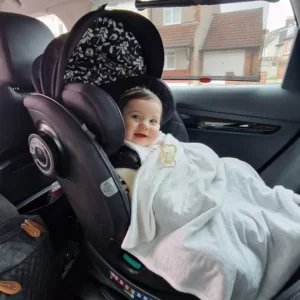
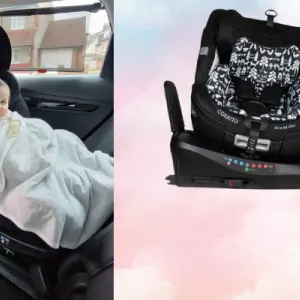
New for 2023, the Cosatto All in All Ultra 360 Rotate i-Size is an extended rear-facing car seat that can be used from birth all the way up to 12 years old.
Conforming to the R129 (i-Size) standard, with safety features including pop-out side impact protection and a quick-release five-point anti-escape system, this car seat has also been crash tested in line with the strict testing conducted by the ADAC.
Our parent tester, Rachel, loved the 360-degree rotation, which allowed her to easily get her seven-month-old in and out of the seat, as well as the simple five-minute installation with helpful colour indicators for extra peace of mind.
While she found the car seat too heavy to move between cars, she says, “The Cosatto All in All Ultra 360 Rotate offers incredible value for money considering it can be adjusted and extended for a child from birth up to age 12. It comes with all the features you could possibly need, including an impressive 360-degree swivel, pop-out side impact protection and extendable sun hood, and has a hard-wearing fabric that’s easy to clean. I wouldn't hesitate to recommend it to other parents.”
Read next: The best lightweight buggies for babies and toddlers
Best extended rear-facing baby car seat
Britax Römer Dualfix Plus i-Size
Extended rear-facing seat
360-degree rotation
12 recline positions
Machine-washable seat cover
Can be used from birth right up to four years
A huge seat that takes up a lot of space in the car
Tricky to install
Not travel system-compatible
Key specs
RRP: £325 | Type: i-Size | Suitable from: Birth to 105cm (or age four) – forward-facing from 76 to 105cm | Rear-facing until: 20kg (approx. four years) | Installation: ISOFIX | Weight: 15kg | Guarantee: Two years
What Mumsnet users say
The Britax Römer Dualfix Plus i-Size is an i-Size/R129-approved extended rear-facing car seat that's designed to keep your child in a rear-facing position till they reach 105cm in height (approximately four years of age) or 20kg, whichever comes first.
While many of the other Britax Römer car seats, such as the Britax Römer Dualfix M Pro are only suitable for babies from around three months, this upgrade from the original Dualfix i-Size includes a newborn insert, with additional support to make it suitable from birth.
There’s no denying that it's a huge car seat that'll take up significant space in your car, but it's ideal for parents that have a larger vehicle and want to keep their child rear-facing for as long as possible.
Unlike the Maxi-Cosi Pebble Plus which only rearward-faces until around 12 months, the Britax Römer Dualfix Plus i-Size can keep your child rearward-facing till approximately four years of age, providing the best protection in the event of a front-on collision. Thanks to its large side wings, it also creates a protective cocoon around your baby in the event of a side impact, scoring a 2.1 (good) rating from ADAC.
However, this isn’t a seat you’ll want to swap between different cars regularly due to its weight. That said, this model is quick and easy to install thanks to the integrated ISOFIX base with a support leg. The swivel seat also rotates a full 360 degrees, allowing you to turn the seat to the open door for easy placement of your baby without straining your back.
With a secure five-point harness that can be easily adjusted with one hand and no less than 12 recline positions, you can be certain to find a comfortable travel position for your child, whether they’re sleeping or watching the world go by.
Read next: The best car sunshades for babies
Best 360 baby car seat
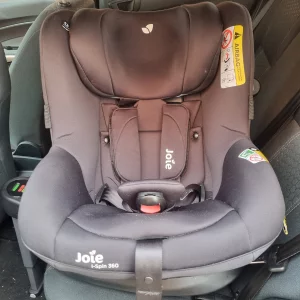
The swivel seat makes it easy to get your baby in and out
Extended rear-facing
Easy to install with reassuring installation indicators
Six recline positions, including a lie-flat recline
Chunky padding
The floor leg fixture is a bit fiddly
The design and weight makes it difficult to carry the seat to and from the car
Key specs
RRP: £280 | Type: i-Size | Suitable from: Birth to 105cm or 18kg (four years old), whichever comes sooner | Rear-facing until: Minimum of 15 months or to 105cm for extended rear-facing | Installation: ISOFIX | Weight: 13.9kg | Guarantee: Two years
What Mumsnet users say
Tested by mum of two, Sam: Read the full Joie i-Spin 360 review
Just like the Britax Römer Dualfix Plus i-Size, the Joie i-Spin 360 i-Size is a rotating R129-compliant car seat that can be used from birth until your child reaches 105cm or 18kg (approximately four years old). For safety and i-Size compliance, the Joie i-Spin should be used rearward-facing for a minimum of 15 months. After this point, you can switch to forward-facing if you wish, however we recommend that your child remains rearward-facing as long as possible for maximum protection.
An improvement on the original Joie Spin 360, the i-Spin model has a lock that, when engaged, prevents you from turning the seat to face forwards too soon. It also performs significantly better than its predecessor for safety too, with Guard Surround Safety™ panels for side impact protection and a cushioned Tri-Protect™ headrest. This new version received a high test score in Which?’s crash testing, excelling when it came to comfort, installation and fitting, as well as a Good (1.8) score from ADAC.
With an integrated base and weighing 13.9kg in total, it's a far cry from the lightweight Maxi-Cosi Pebble Plus, but because it offers extended rear-facing for up to four years, it can be used for a far longer duration. Thanks to the 360-degree rotation, it’s also straightforward to add and remove even the wriggliest of babies.
Due to the size and robust design, initial installation may involve a little clambering over your seats, but overall the ISOFIX fittings make it very easy to install, with installation indicators on the base that means there’s a very low risk of fitting the seat incorrectly.
While some reviewers have found the 19 adjustable leg positions on the supporting leg a little fiddly, it helps to tailor the seat to your vehicle and offers additional stability and protection upon impact.
MNHQ editor and parent, Laura, who uses this car seat daily with her 14-month-old, says, “Installation was a breeze. The indicators turn green to let you know when the car seat has been correctly installed, which is so reassuring. Yes, the seat is big, but it’s really comfy - so much so that my daughter falls asleep in it on almost every long car journey.”
As your child grows, you can automatically adjust the harness by raising the cushioned, three-layer headrest, with no need to rethread the straps. Surround panels extend when the child is placed in the seat, providing strong protection for your baby's head in the event of a collision.
With ventilated fabrics and a choice of six recline positions (regardless of your travel direction), you can be confident your baby will be cosy and comfortable during road trips both short and long.
Read next: The best 360 spin car seats
Best baby car seat for safety
Silver Cross Dream i-Size
Safest infant carrier ever tested (ADAC 2020)
Described as ‘one of the best’ by Which?
Easy to install
Travel system-compatible with Silver Cross pushchairs
Premium fabrics
The seat cover can be difficult to remove for washing
Heavy when compared to other newborn baby car seats with a similar weight/height limit
Key specs
RRP: £225 (base sold separately) | Type: i-Size | Suitable from: Birth to 85cm (approximately 15 months) | Rear-facing until: 15 months | Installation: ISOFIX with the Dream i-Size base | Weight: 5.45kg (7.2kg with the base) | Guarantee: Three years
What Mumsnet users say
Silver Cross is a much-loved British brand, well known for its stylish and luxurious baby products. The Dream i-Size is no exception and is suitable for babies from birth to 85cm (approximately 15 months).
It costs significantly more than the Maxi-Cosi Pebble Plus and Maxi-Cosi Rock despite no significant difference in size limits, but with good reason - it’s described as ‘one of the best’ car seats for safety by consumer champion Which?. The Dream i-Size has also received ADAC’s highest rating to date for an infant car seat when used with the Silver Cross Dream i-Size base.
The Silver Cross Dream i-Size can be installed in your car using the three-point adult seatbelt but, for the highest level of protection, you’ll need to purchase the Silver Cross Dream i-Size base. Retailing at around £169, the base is a significant investment for a car seat that’ll need changing after approximately 15 months as the next stage seat, the Silver Cross Motion All Size 360 comes with its own integrated base.
Despite the overall premium price tag, it’s an investment well made if safety is your number one priority. With an overall five-star safety rating from Which?’s crash test lab and an impressive score of 1.5 (Very good) from ADAC, this rearward-facing seat is packed full of enhanced safety features to keep your baby safe, including four layers of side impact protection. Thanks to the visual indicators on the base, there’s also a very low risk of installing this seat incorrectly, with an installation app that guides you through the steps for ultimate peace of mind.
Made with super soft and breathable bamboo fabrics, the newborn insert and cushioned sides can be removed as your baby grows, ensuring your baby will be safe and snug even if they nod off during your commute. Compatible with Silver Cross travel systems (including parent favourite, the Pioneer), you can easily move your baby from the car without waking them when you reach your destination.
Best baby car seat for long journeys
Newborn nest and comfort features
Good ADAC score 1.9
Has a rotating base option
Lightweight
Comes with a four-year guarantee
Car seat only suitable up until 15 months
Base sold separately
Doesn't have recline options
Key specs
RRP: £200 (base sold separately) | Type: i-Size | Suitable from: Birth to approximately 15 months | Rear-facing until: 15 months | Installation: ISOFIX (with base sold separately) | Weight: 4kg | Guarantee: Four years
If you are regularly going to travel on long-distance car journeys with your newborn, the Cosatto Acorn 2 i-Size car seat is worth considering. It’s packed with safety features – like its rear-facing design and strong ADAC rating of 1.9 – and comes with a cushioned newborn nest/insert to keep your baby secure and comfortable from day one.
The Cosatto Acorn 2 stands out as an excellent choice for road trips thanks to its lightweight 4kg design, making it much easier to carry to and from the car without straining yourself – particularly useful if you’re already juggling bags and a baby. The addition of the newborn nest means your little one is safely cocooned with extra head, neck, and hip support, which helps keep them snug and well-positioned on longer journeys. Combined with side-impact protection and an energy-absorbing shell, this gives you real peace of mind when travelling.
Installed easily with ISOFIX using the Cosatto Acorn 2 rotating base, the seat has a relatively good lifespan for a baby car seat – suitable from birth to approximately 15 months or 87cm, after which you’ll need to buy a suitable toddler seat.
Day-to-day use is also designed to be parent-friendly. The harness and headrest can be adjusted simultaneously with one hand – no rethreading required – making it quicker and less fiddly to get the right fit as your baby grows. For longer trips, the UPF 100+ adjustable canopy adds welcome sun and shade protection, while the well-padded seat keeps your little one comfortable throughout.
As well as complying with the latest R129 i-Size safety standards, the Acorn 2 has shock-absorbing materials and a secure three-point safety harness alongside the cushy newborn insert to keep your baby comfortable and well supported at all times.
When your journey is complete, you can simply slide the car seat off the base and pop it onto a compatible travel system like the Cosatto WOW 3 bundle – including a carrycot, pushchair, the Acorn 2 – plus a range of accessories like rain covers and mosquito nets. And of course, in true Cosatto style, it’s available in a choice of bold, eye-catching designs – from cute animal prints to striking geometric patterns – so you don’t have to compromise on personality while ticking all the safety boxes.
Worth noting: The rotating ISOFIX base is sold separately at around £200, which does add to the overall cost. Unlike some other modular systems, this base can’t be reused for a toddler car seat, so you’ll need to budget for a full upgrade once your baby outgrows the Acorn 2. The seat itself also doesn’t have recline options, so your baby will always be in the fixed position. That said, if you’re looking for a lightweight, safe, and supportive infant seat for long journeys, the Acorn 2 is a very strong choice.
Read next: The best lie-flat car seats for newborns
Best modular baby car seat
Lightweight removable liner to remove your baby from the car without waking them
Swivel seat
Travel system-compatible
Ideal for parents with back problems or for use after a caesarean
Base is compatible with next stage swivel car seat the Maxi-Cosi Pearl 360 i-Size
Costly for a first stage car seat, especially as the base is sold separately
Key specs
RRP: £260 (base sold separately) | Type: i-Size | Suitable from: Birth to 75cm (approximately 12 months) | Rear-facing until: 75cm (approximately 12 months) | Installation: ISOFIX or seatbelt | Weight: 5.3kg complete or inner carrier 1.7kg | Guarantee: Two years
What Mumsnet users say
Tested by new mum, Alice: Read our full Maxi-Cosi Coral 360 i-Size review
Described as a modular car seat due to its unique two-part design, the Coral 360 is an innovative R129-standard rotating car seat suitable from birth to 75cm or 12kg (approximately 12 months).
If you’ve had a caesarean birth or regularly experience back pain, lugging your newborn and the weight of a car seat can be physically challenging. Whilst permanently secured car seats such as the Joie i-Spin 360 i-Size and Britax Römer Dualfix Plus i-Size can help, they’re not travel system-compatible, meaning you have to wake your sleeping child when you reach your destination. The Maxi-Cosi Coral 360 is a great alternative.
Uniquely different from the Maxi-Cosi Pebble Plus, the Maxi-Cosi Coral offers a choice of carrying options. You can detach the entire seat and attach it to a compatible travel system or simply lift out the lightweight (1.7kg) soft fabric liner using the retractable handles. The latter provides a far lighter load for carrying your baby safely back into the house while leaving the heavier hard shell of the seat installed in your car.
The Maxi-Cosi Coral 360 can be installed with the three-point adult seatbelt or via ISOFIX connectors using the FamilyFix 360 base (sold separately). An upgrade from the original Maxi-Cosi Coral, this version is a swivel seat, allowing the seat to quickly and easily be rotated to and from the door side using one hand when attached to the FamilyFix 360 base.
The base offers additional stability but is also compatible with the next stage 360 spin car seat, the Maxi-Cosi Pearl 360 i-Size, which can be used as an extended rearward-facing seat until your child is four. Installing this seat with the 360 base also reduces the risk of fitting the seat incorrectly, with audio-visual indicators that confirm correct use.
While the 360 version of the Maxi-Cosi Coral is yet to receive ADAC testing, the original Coral design (without the swivel feature) scored a Good score overall (1.9) with a very low risk of injury in a front or side accident.
The baby-hugg inlay will ensure your baby is cosy and comfortable during your travels, while the large sun canopy keeps them protected from the sun’s harmful rays.
The Coral is also compatible with a large range of pushchairs including the Egg2, BabyStyle Oyster3, and iCandy and Bugaboo prams using adapters (sold separately). Due to its compact size, it’s also approved for use on an aeroplane.
Read next: The best car seats to take on the plane
Best lie-flat baby car seat
Good ADAC rating (1.7 overall, safety grade: 1.3)
Swivel seat design
Innovative recline system
Adjustable headrest grows with your child
Costly
Base sold separately
Key specs
RRP: £230 | Type: i-Size | Suitable from: Birth to 24 months (45 to 87cm) | Rear-facing until: Minimum of 15 months | Installation: ISOFIX | Weight: 4.5kg | Guarantee: Two years
What Mumsnet users say
Having been rated Test Winner by the ADAC and Stiftung Warentest in 2023 with a result of 1.7 and an extraordinary safety grade of 1.3, the CYBEX Cloud T i-Size (with Cybex T Base) is a great choice if you’re looking for a top-notch car seat for your little one. suitable from birth to 24 months (45 to 87cm), the Cloud T is an upgrade on the original Cybex Cloud Z and Z2 with many similar features.
However, this latest model has updated mesh fabrics meaning more breathability and better ventilation. Plus, it has a recline hinge situated in the hip area that allows for a simultaneously flattened back and leg rest, creating an optimal lying position for your baby (super handy if your child tends to fall asleep to the motion of the car.) When fitted onto a travel system, it can be used in a completely lie-flat position, allowing for a more comfortable sleeping position for your baby and functioning as a great alternative to a carrycot.
It features a 180-degree rotation, allowing you to easily place your child in and out of the car seat whilst ensuring they sit properly and are securely strapped in. Plus it has an updated handle, making it much easier to use.
The Cybex Cloud T can be installed via your car’s three-point adult seatbelt or using ISOFIX on the Cybex T base which offers additional stability and increased protection in the event of an accident. The Z2 base can also rotate the seat to the car door for speed and convenience, allowing you to place your baby in and out of the car seat with minimal effort. Whilst an investment, the Z2 Base is also compatible with the next stage Cybex Sirona T i-Size car seat, allowing your child to remain rearward facing until approximately four years of age.
For newborns, the Cybex Cloud T comes with a cosy and comfortable padded newborn inlay, which creates a near-flat lying position and added support for smaller or premature babies. There are also 12 headrest positions which can be raised with one hand to adapt the seat as your child grows with the integrated harness adjusting automatically.
Compatible with a wide range of pushchairs including Cybex and gB, this seat performs well across safety tests, with a five-star rating for safety in Which? crash test results and a Good (1.7) score from ADAC. With excellent manual side impact protection, it has a very low risk of injury in both front and side collisions, however you must remember to manually flick out the side impact protection before your journey begins.
Read next: The best cabin-approved strollers for easy travel
Best lightweight baby car seat
Ultra-lightweight (3.3 kg) and easy to handle
Safe, with a "good" 1.6 ADAC rating
Built-in ISOFIX for quick, secure installation
Portable and easy to use across multiple cars
Comfortable padding for infants
Dream Drape shield, perfect for naps
Pricey
Doesn’t have many recline options
Only suitable for use up to 13kg
Key specs
RRP: £300 | Type: i-Size | Suitable from: Birth to 15 months (13kg) | Rear-facing until: 15 months | Installation: ISOFIX | Weight: 3.3kg | Guarantee: Two years
What Mumsnet users say
Tested by new mum, Catrin: Read our full Nuna Pipa Urbn car seat review
The Nuna Pipa Urbn is a compact, lightweight, and safe rear-facing car seat for babies from birth to 15 months (or around 13 kg). Weighing just 3.3 kg, it’s one of the lightest options available and is easy to install with its built-in ISOFIX connectors or via a seatbelt for cars without ISOFIX. Its portability makes it an excellent choice for travel, including use on planes, as it complies with most airline requirements and is TUV aircraft certified.
With a 1.6 "good" ADAC safety rating, Side Impact Protection (SIP), and Aeroflex™ foam to diffuse impact energy, the Pipa Urbn doesn’t compromise on safety. Parent tester and new mum Catrin praised its convenience, comfort, and lightweight design, noting it was a lifesaver in the early postpartum weeks. She also appreciated its compact size, which freed up space in the backseat.
However, the lack of a reclining feature was a drawback for longer journeys, with Catrin mentioning her son appeared more hunched compared to using her Maxi-Cosi Pebble 360 Pro. For parents prioritising a lie-flat position, alternatives like the Maxi-Cosi Jade might be worth considering.
Why do I need a baby car seat?
Using a baby car seat when you travel in a vehicle with your child is the law. Your child must be in a car seat until they are 12 years old (or 135cm tall), whichever comes first.
What size car seat is suitable for newborns?
UK legislation states that a child needs to be in a car seat until they are 12 years old or 135cm tall (whichever comes first). Car seats are based on either weight or height, depending on which regulation they follow.
Seats under the R44 regulation are weight-based and seats under R129 are height-based. Both types of car seats are available to buy and legal to use in your vehicles in 2026, but R44 seats will likely be phased out over the coming years.
R44 car seats come in stages:
Group 0+: birth to 13kg (around 12 to 15 months)
Group 0+/1: birth to 18kg (around 4 years old)
Group 0+/1/2/3 (multi-stage): birth to 36kg (around 12 years old)
R44 car seats can be fitted in one of two ways: via your car’s ISOFIX points (which secures the seat directly onto the vehicle chassis) or alternatively with your car’s adult seatbelt which is handy if you have an older vehicle which doesn’t have ISOFIX anchor points as standard.
Group 0+ car seats are usually travel system-compatible and often come with a newborn insert for small babies. Group 0+/1 seats are designed to adapt to your growing child and are generally bigger and heavier than Group 0+ seats, which means they are typically designed to stay in one car. Group 0+/1/2/3 seats are combination car seats that grow with your child all the way up to 12 years old.
It’s worth noting that whilst R44 seats are perfectly legal, they generally don’t have the same side impact testing as seats that conform with the more recent R129/i-Size standard.
Claire Waterhouse of Child Seat Safety says, “While under ECE R44/04 there is no requirement to do a side-impact test, some manufacturers do make seats that have this safety feature. You should look for it regardless, as well as the seat’s overall crash test rating.”
What is i-Size?
The R129 standard (also referred to as i-Size) was introduced in 2013 and includes more detailed safety tests for head/neck protection and side-impact crashes. In an R129 i-Size car seat, suitability is based on your child’s height rather than their weight, making it easier to see when your child is outgrowing their seat.
R129 seats use ISOFIX to safely secure your seat to the main chassis of your car. This reduces the risk of installing the seat incorrectly but does require the addition of an ISOFIX base which can increase the cost.
Read next: Tips for keeping you and your family safe on the road
What's the difference between R44 and R129 car seats?
R44 regulation car seats
Classification based on weight
Rear and front impact testing
Can be fitted using seat belt or ISOFIX points
Seat must be rear-facing until your child weighs 9kg
R129 regulation car seats (i-Size)
Classification is based on height
Rear, front and side-impact testing
Seat is attached with ISOFIX points
Seat must be rear facing until your child is older than 15 months
Read next: The latest car seat regulations, including R129 and R44.04
What should I look for when buying a baby car seat?
Choosing the right car seat for your baby can be slightly overwhelming, but here are the main things you need to consider when making your choice:
R44 or R129 compliant?: Be sure to look at which standard the car seat has been measured to. Whilst R44 car seats are still perfectly legal, you may prefer the enhanced side impact testing on newer R129 (i-Size) car seats.
Ease of installation: How easy is the car seat to install in your vehicle? Does it offer a choice of seatbelt or ISOFIX fitting and, if ISOFIX only, is this compatible with your car? It’s also worth considering how heavy and bulky the car seat is, particularly if you are going to be installing the car seat on your own.
Weight: If you are likely to be carrying your car seat to and from the car or swapping between vehicles regularly, you should consider how heavy the seat is to carry. Car seats such as the Maxi-Cosi Coral (see above) are ideal for parents with back complaints as the lighter inner liner can be removed without you need to take the entire seat out of the car.
Safety features: What safety features does the car seat offer? How does it perform in Which? and ADAC crash testing? Whilst older seats tend to focus on front-on collisions, seats tested to the R129 standard offer enhanced side impact protection, although in some cases these need to be manually triggered.
Plane compatibility: Not all car seats can be taken on a flight, so if you’re planning to travel regularly with a baby under 12 months, you’ll need to look out for seats that are TÜV-approved for aeroplane use.
Is it travel system compatible?: Do you do a lot of walking and hope to attach the car seat to your pushchair? Not all car seats are travel system-compatible, and those that are typically to have a shorter lifespan of around 12 to 15 months. If you tend to travel more in the car, you may get better value for money from a fixed extended rear-facing car seat, lasting until your child is around four years of age.
Is the base included?: Whilst some car seats include an integrated base, others need bases that are sold separately. Some car seats can be fitted with the seatbelt alone, but they are only truly i-Size-compliant if installed on the base via ISOFIX adapters. You should also consider whether the base is compatible with the next-stage car seat you intend to use as this improves the overall value for money and longevity of use.
How long does it last?: How long do you want to use the seat for? Whilst lie-fat seats such as the Maxi-Cosi Jade only last around six months, others such as the Cozy N Safe Arthur (see both above) can see you through till your child is 12 years old.
Does the seat swivel?: If opting for a fixed car seat that stays in the car, you may want to look out for a swivel seat, which allows the seat to be turned to the door side so that you can easily place your child in the seat. This prevents stretching over the seat and is helpful for parents with back problems or those recovering from a c-section. They also offer a relatively seamless transition between rear- and forward-facing when the time is right.
What is ISOFIX?
ISOFIX is a structural system built into the car that has fitting points to attach an ISOFIX car seat. The seat is latched onto the ISOFIX points and then braced by using either a support leg or a top tether.
You can only use an ISOFIX seat in a car with ISOFIX fittings and not all vehicles have them, especially older models. It is important to check the child car seat manufacturer’s compatibility list as there are some vehicle features that can make the child car seat incompatible.
You’ll be able to find out if your car has ISOFIX attachments by looking for tags or labels on the base of the seat or by contacting your manufacturer.
Is ISOFIX safer than a seatbelt?
Where possible, installing a seat with ISOFIX is far safer than installing with a seatbelt alone. Seatbelt installation comes with a far higher risk of installing correctly, for example, twisting the belt or not pulling it tight enough to secure the seat.
ISOFIX connections also offer more stability and reduce the amount of movement in the seat, providing better protection for your child in an accident, particularly a side-on impact.
Read next: The best baby carriers to buy, as rated by Mumsnetters
What is an extended rear-facing car seat?
An extended rear-facing car seat is a car seat that can remain reward-facing for longer than the minimum 15-month duration.
By law, babies need to remain rear-facing until they are 15 months old, after which they can be turned forward-facing. Whilst many parents turn their babies forward-facing as they grow (usually so they can see out the window), according to car seat safety expert and Chief Executive of Good Egg Car Safety, Jan James, it is far safer to keep your baby rearward-facing as long as possible. Some experts believe it to be as much as five times safer.
Some car seats such as the Joie i-Spin 360 i-Size and Britax Römer Dualfix Plus i-Size are classed as extended rear-facing car seats. They are suitable from birth to four years and offer rearward-facing travel for the entire duration of use.
What is a 360-degree or swivel car seat?
A 360-degree or swivel car seat can be turned to the door side for easy placement of your child in the seat, which can be helpful for parents who have challenges with back pain or for whom reaching across the backseats could be difficult.
A swivelling seat also helps make a seamless transition from rearward- to forward facing when the time is right.
Some swivel seats can rotate a full 360 degrees, while others simply rotate 180 degrees to move between front and rear-facing installation without needing to remove or reinstall the base.
How long can a baby stay in a car seat?
A study by the Lullaby Trust in October 2016 found that babies should only be kept in a car seat during travel for a maximum of two hours and be removed at the earliest opportunity. For babies under three months, experts recommend they are only kept in a car seat for 30 minutes at a time.
What is the two-hour rule?
The two-hour rule recommended by manufacturers suggests that babies should not be kept in a car seat for longer than two hours at a time. This is because the raised and scrunched-up position in a car seat can put a strain on the baby’s still-developing spine and restrict airflow to the baby’s lungs.
It is recommended that, on longer journeys, you take regular breaks and remove your child from the seat, allowing them to stretch their legs and realign their spine. As tempting as it may be, you should not allow your child to sleep in the car seat when you reach your destination and should be removed to sleep on a firm, flat surface.
How much does a baby car seat cost?
Prices range from £30 to over £400, but it's not always the case that the most expensive car seat is the best.
All car seats have to pass the minimum safety criteria laid out by the R44 regulation to be legally sold, but many of the bigger brands do their own independent tests at higher speeds. Some have even passed the Swedish Plus Test, which is the world's strictest car seat test.
Overall, consider your budget and always check independent reviews before making any decision.
Read next: The best double buggies, as rated by parents
Can you use a second-hand car seat?
A car seat's main job is to protect your baby and, for that purpose, it tends to be a single-use item. You can use a car seat until you have an accident, at which point it must be thrown away and replaced.
While second-hand seats aren't necessarily unsafe, if you buy a seat from someone you don't know you have no real way of knowing the seat's history. This may not be the case if it's been passed down from a relative or a friend, but even if the seat looks fine, it could still have suffered invisible damage that has made it weak or unsafe.
Margaret Bolt, a qualified Child Seat Safety Adviser and founder of Rear-Facing Toddlers says, "It isn’t a case that the seat will suddenly become less robust or less likely to withstand an accident, but, as a seat gets older, it becomes more difficult to know its history. It may have been passed from owner to owner, its crash history might not be known, instructions may be missing or spare parts unavailable.”
As such, car seat safety experts generally recommend never buying a secondhand car seat.
Can you take a car seat on a plane?
If a child is under 18kg, then using a car seat on board a plane is the safest way to travel but the seat must be certified for use by either the CAA (Civil Aviation Authority) or the FAA (Federal Aviation Administration) or be TÜV-approved. Check with your airline for their guidelines first. Airlines will also have car seat width restrictions in place and these can vary by carrier. Bear in mind that you'll need to book a separate seat for your child to travel in this way, as opposed to on your lap.
When it comes to travelling abroad, make sure you understand the law in the country you are travelling to. EU seats can be used throughout Europe, and also in the Middle East, some parts of Africa, Asia and New Zealand. They're technically illegal to use in the USA, Canada and Australia, although they may be permitted for a holiday.
A car seat can often also be taken in the hold free of charge, but make sure it's well padded and covered to avoid being damaged.
If you're not travelling with a car seat but want to use one on arrival, you may want to consider ordering a new seat from a local retailer at your destination and see if it can be delivered to where you're staying or to the car rental place.
We don’t recommend hiring seats as they're often old, may not be suitable for your child and you won't know the history of them.
Read next: The best family holiday destinations, according to Mumsnet users
6 minute car seat safety video
Here, car seat safety expert Jan James from Good Egg Car Safety answers some of the most frequently asked car seat questions:
What is ISOFIX, and is it safer than a seat belt? (00:00:17)
How long can a newborn stay in a car seat? (00:00:50)
When can babies legally go in forward-facing car seats? (00:01:43)
How tight should the straps be? (00:02:37)
Why buy a £300 car seat when you can get one for £30? (00:03:08)
Can an infant car seat be in the front seat of a vehicle? (00:04:34)
Can I use a secondhand car seat? (00:05:01)
How we tested the best baby car seats
Four months of daily testing
30 hours researched
The car seats were all scored on the same criteria: safety, stability and comfort, assembly, day-to-day use, aesthetics, cleanliness and value for money.
Safety and stability
We looked at factors including:
Crash test results
How easy each seat was to attach and detach
How useful and effective the designated fixing systems (seatbelt or ISOFIX) were to help parents avoid making any dangerous mistakes – was there was any room for error?
Straps and harnesses, particularly when it came to clicking them into place and adjusting
Padding and other safety features
Switching from rear- to forward-facing, where applicable
Materials – were they durable and robust?
How comfortable the baby was in the seat – were there any parts that could rub the skin or cause irritation? Were all fittings, including the harness, baby-proof?
How distracting the seat was for the parent when driving – did the seat obscure their view? Were the colours too bright?
Installation
We checked that:
Each seat came with all the parts necessary to install
The instructions were clear and easy to follow – if ambiguous, we made note
There were helplines or online videos for extra guidance
Day-to-day use and comfort
We tested:
How quick and easy it was to get the baby in out and of the seat (and timed the whole process)
Whether or not they were able to fall asleep comfortably and if the seat could be removed with a sleeping baby still inside
For longevity – could the seat grow with the child?
Each seat on busy school runs, shopping trips, long car journeys and quick trips throughout the day, looking at both comfort and convenience
Aesthetics and cleaning
We looked at:
Whether the seat was easy to clean – we spilt milk and juice on each seat to see how it fared after cleaning and checked for removable covers that could be thrown in the washing machine at a moment's notice
The overall design of the seat, including colours, materials and thoughtful touches
Value for money
We assessed:
Price and evaluated whether each car seat offered good value for money – could it be used up until the age of four, or even 12, and was it affordable for the majority of parents?
About the author
Lucy Cotterill is a mum of two and Content Writer at Mumsnet, specialising in baby/child product reviews and round-ups. Having written product reviews on her own blog Real Mum Reviews since 2012, Lucy loves to research and explore the pros and cons of baby products, scrutinising reviews and consumer feedback to help parents make confident purchases that benefit their families.
Lucy has personal experience of researching, buying and using car seats with her own children, including the first car seats compatible with her travel system to 360-degree swivel seats and the multi-stage car seats that her children still use today.
Originally from a HR background with a degree in Business Studies, Lucy developed a real passion for blogging and writing when her children were young, going on to write for several online publications including US parenting site Pregistry and the Evening Standard.
When she’s not manically tapping the keys of her laptop, Lucy loves nothing more than to cosy up with her Kindle and enjoy the latest thriller, or compete in Nintendo Switch rallies with her daughters aged six and 10.